How to Learn 3D Shoe Design: Skills, Software and Where to Start
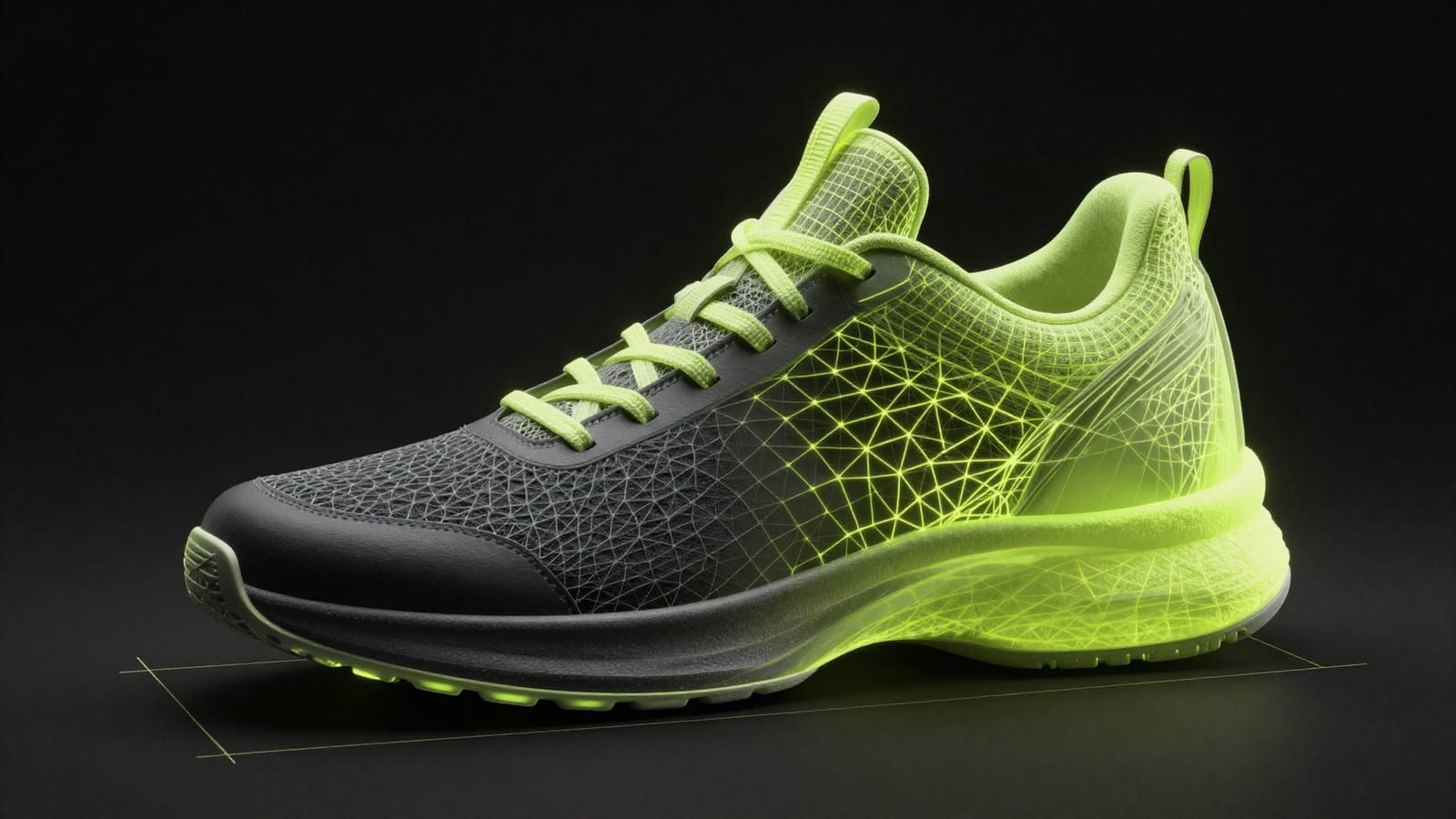
You don't need a fashion degree to start learning 3D shoe design, but you do need to know where real footwear brands put their designers to work. Zara's footwear division, Tempe, runs a team of more than 50 designers inside Icad Universe, the software historically known as iCad3D+ (Arsutoria School, 2026). That's not a coincidence. Footwear has its own dedicated 3D tools, separate from the generalist software used in most product design. This guide covers the skills to build first, the software the industry actually runs on, and a realistic, staged path from zero to your first digital shoe.
Key Takeaways
- Sketching and last/construction knowledge come before software, not after.
- Zara's Tempe division runs 50+ designers on Icad Universe, footwear's dedicated CAD platform.
- A vertical CAD license costs around €10,000; Rhino costs under €1,000.
- Structured courses range from £740 to €12,000; free self-study is also a valid starting point.

The Skills You Need Before You Touch 3D Shoe Design Software
Most beginners assume software comes first, but every serious 3D shoe design path starts with sketching and construction fundamentals. Arsutoria School's flagship 15-week program dedicates its first four weeks purely to sketching, before any 3D software enters the syllabus (Arsutoria School, 2026). That sequencing isn't arbitrary.
Sketching comes first because it's how you communicate ideas quickly, to yourself and to a technical team. You don't need gallery-level illustration skills. You need to draw a shoe silhouette, a last shape, and a sole profile clearly enough that someone else could build it.
Last and construction theory is the second pillar, and it's the one most self-taught beginners skip. A last is the physical form a shoe is built around, and every 3D model you make later has to respect its geometry. Skipping this step is why so many self-taught 3D shoes look correct on screen but wouldn't fit a real foot.

Spatial and topology awareness matters more in footwear than in most other product categories. Shoe uppers are curved, layered surfaces wrapped around a 3D last, not flat panels. Workflows like Rhino's SubD modeling, demonstrated in webinars from official Rhino distributors, exist specifically to handle this kind of organic, non-flat geometry (McNeel Europe, 2023).
In my years as an Icad Universe trainer, the pattern is consistent: the ones who struggle with software are almost always the ones who skipped construction theory. Software is fast to learn. Understanding why a last curves the way it does takes longer, and it's worth doing first.
Why Do Footwear Brands Use Dedicated 3D Software Like Icad Universe?
Footwear brands split into two camps: those using vertical, shoe-specific CAD and those adapting generalist 3D tools. Zara's Tempe division and Deichmann both design inside Icad Universe, while Nike, Adidas, New Balance, Asics, Brooks and Mizuno rely on Rhino and 3Ds Max (Arsutoria School, 2026). Neither approach is wrong; they solve different problems.
Vertical footwear CAD exists because shoes aren't flat products. Icad Universe was developed by the Spanish research center Inescop and is distributed worldwide by Red21. It merges what used to be two separate tools, Icad Discovery and Icad Lancer. The result is one 3D-to-2D pattern engineering environment (Icad Universe official site, 2026; Red21, 2026). A last-fitted 3D model can generate production-ready 2D patterns without leaving the software.
The proof shows up in real production, not just marketing copy. The "Nnormal" capsule collection, a partnership between ultrarunning athlete Kilian Jornet and Camper, was developed entirely in 3D using Icad Universe before a single physical sample existed (Simac Tanning Tech, 2026).
Generalist tools still have a real place, especially at brands built around industrial design pipelines. Rhino is a generalist 3D tool, often paired with the Grasshopper plugin for generative modeling. It has become integral to the footwear design process at studios that prioritize form exploration over pattern engineering (framas, 2023). If you want a full feature-by-feature breakdown of how these tools compare, our shoe design software guide covers that in depth.
What Does a Realistic Learning Path Look Like?
A realistic path to 3D shoe design runs through four stages, not one shortcut. Arsutoria School's Shoe Design Path packs all four into 15 weeks: 4 weeks of sketching, 5 weeks of 3D design, and 6 weeks of collection development (Arsutoria School, 2026). You can compress or stretch that timeline, but you can't skip stages.
Stage 1: Sketching and Visual Communication
This stage is about speed and clarity, not polish. You're learning to draw silhouettes, lasts, and sole profiles fast enough to explore dozens of ideas before committing to one. Most structured programs allow three to four weeks for this alone.
Stage 2: Last and Construction Theory
Here you learn how a last is built, how uppers wrap around it, and how sole units attach. This stage doesn't require software at all. It requires understanding the physical object your 3D model will eventually have to match.
Stage 3: CAD Onboarding
This is where you pick a tool and learn its interface: Icad Universe if you're aiming at industry-standard vertical CAD, Rhino if you want generalist flexibility. Five weeks is a realistic minimum to reach basic fluency at this stage.
Stage 4: Capstone Collection Development
The final stage applies everything to a small, cohesive collection, typically three to six styles. It's where sketching, construction knowledge, and software fluency come together into a portfolio-ready body of work. This is typically the longest single stage, often around six weeks.
Quick take: A realistic timeline runs roughly 4 weeks of sketching, 5 weeks of CAD onboarding, and 6 weeks of collection development, based on Arsutoria School's published 15-week curriculum (Arsutoria School, 2026).
How Much Does It Cost to Learn 3D Shoe Design?
Costs range from free self-study to structured programs above €10,000, depending on depth and credentialing. University of the Arts London's beginner short course starts at £740 with no prerequisites, while Arsutoria's 15-week Shoe Design Path costs €12,000 (University of the Arts London, 2026; Arsutoria School, 2026).
Software itself carries a separate cost, on top of tuition. A full vertical CAD license, the kind used for Icad Universe, Shoemaster, or Romans CAD, runs around €10,000 for a company. Rhino costs under €1,000, and Blender is free (Arsutoria School, 2026). Most schools provide licensed access during the course, so students rarely pay this directly.
For a middle-ground option, Arsutoria's Shoe Lasts and Soles 3D Engineering course runs five weeks for €5,000, using Rhino and EasyLast, and explicitly requires no prior experience (Arsutoria School, 2026). It sits between a short intro course and a full 15-week specialization.
Self-Taught vs. Structured Course: The Real Trade-offs
Self-study costs less and moves at your own pace, but structured courses shorten the learning curve and add real deadlines. UAL's beginner course requires no prerequisites and starts at £740, proving formal training doesn't have to mean a huge upfront cost (University of the Arts London, 2026).
Self-taught learners can absolutely reach a professional level. It just takes longer, and it demands more discipline around sequencing: sketching before software, construction theory before advanced modeling. Free resources like Blender tutorials and sketching sessions on YouTube can cover the fundamentals without any tuition cost.
So why do so many working designers still choose a paid course? Structured courses earn their price through feedback and deadlines, not just content access. A tutor who catches a last-fitting error in week two saves you from rebuilding a full 3D model in week ten. That kind of correction is hard to replicate alone.
If you're weighing this decision against a longer-term career move rather than a single course, our guide on how to become a 3D footwear designer breaks down the job market side of that choice.
Where Should You Start Learning 3D Shoe Design?
Start with sketching practice this week, not software. Spend two to three weeks drawing shoe silhouettes and lasts daily before installing any CAD tool, the same sketching-first sequencing that structured programs follow.
A practical first-month plan looks like this:
- Weeks 1-2: Daily sketching, silhouettes, lasts, sole profiles.
- Week 3: Basic last and construction theory, using video or written resources.
- Week 4: Install a trial or student license of Icad Universe or Rhino, and rebuild one of your sketches in 3D.
Once you've validated interest with a low-cost first month, a structured program adds the last-fitting expertise and industry-standard software fluency that's harder to build alone. That's the natural next step once the fundamentals click.
Frequently Asked Questions
Do I need a design or fashion degree to learn 3D shoe design?
No. UAL's Shoe Design for Beginners short course has no prerequisites and starts at £740, and Arsutoria's five-week Lasts and Soles course explicitly requires no prior experience (University of the Arts London, 2026; Arsutoria School, 2026). A sketching background helps, but it's teachable in the first weeks of most beginner programs.
How long does it take to learn 3D shoe design?
A focused, structured path takes about 15 weeks for foundational fluency, based on Arsutoria's full Shoe Design Path curriculum (Arsutoria School, 2026). Self-taught learners often need three to six months at a slower pace, depending on how much time they can dedicate weekly.
What's the difference between Icad Universe and Rhino for shoe design?
Icad Universe is a vertical, shoe-specific CAD built around last-fitted 3D-to-2D pattern engineering. Rhino is a generalist 3D tool adapted for footwear, often through the Grasshopper plugin (Arsutoria School, 2026). Vertical licenses cost more but include footwear-specific workflows generalist tools lack.
Can I learn 3D shoe design for free?
Yes, for the fundamentals. Sketching practice, construction theory, and even basic 3D modeling in free tools like Blender cost nothing. What's harder to replicate for free is structured feedback and access to industry-standard software like Icad Universe, which typically requires a paid or student license.
Is Icad Universe hard to learn for beginners?
It has a learning curve, like any professional CAD tool, but structured programs typically allocate around five weeks to reach basic fluency in vertical footwear CAD, starting from sketching fundamentals rather than software alone. Prior construction theory knowledge makes that curve considerably shorter.
What software do most footwear brands actually use?
It depends on the brand's workflow. Zara and Deichmann use Icad Universe, Wolverine uses Romans CAD, and Nike, Adidas, New Balance, Asics, Brooks and Mizuno rely on Rhino and 3Ds Max (Arsutoria School, 2026). There's no single industry standard, only strong regional and company-specific patterns.
Conclusion
Learning 3D shoe design isn't about picking the flashiest software first. It's about sequencing: sketching, then construction theory, then CAD, then a real collection. Zara's 50-designer team on Icad Universe and Arsutoria's 15-week curriculum point to the same lesson: structure beats shortcuts.
Start this week with sketching, add construction theory in week three, then choose a tool, Icad Universe for vertical, industry-standard workflows or Rhino for generalist flexibility. If you're ready to follow a structured path from sketch to production-ready 3D model, our course walks through that same progression, taught around the software real footwear brands use every day.