How to Become a 3D Footwear Designer: Skills, Software & Career Path

Most guides on how to become a shoe designer stop at "learn to sketch and get a degree." That advice was fine fifteen years ago. Today, the brands investing in design talent are looking for something different: professionals who can work inside a 3D pipeline, cut sample costs, and produce photorealistic renders before a single physical prototype gets made. This is the guide those other articles haven't written yet.
I'm Susanna Zampieri, a 3D footwear designer with over ten years in the industry, official trainer for Icad Universe (developed by INESCOP), and I've worked with 50+ luxury brands and trained 100+ students. What follows is the honest, insider view of what the digital footwear design career actually looks like in 2026 — from the first skill to build to the portfolio that lands the job.
Key Takeaways
- The 3D footwear designer role is now a distinct, in-demand specialization at major brands — Nike is actively hiring for it, requiring Blender, Rhino, and generative AI workflows (Nike Careers, 2025).
- The software stack that matters most: Icad Universe, Rhino, CLO3D, Blender, and Vizcom.
- Physical sample waste is the business driver behind 3D adoption — brands need designers who can remove samples from the pipeline, not just make pretty renders.
- A portfolio showing process (last import, flattening, materials, final render) is far more compelling than a gallery of finished images.
- You don't need a design degree — you need demonstrable skills and the right software.
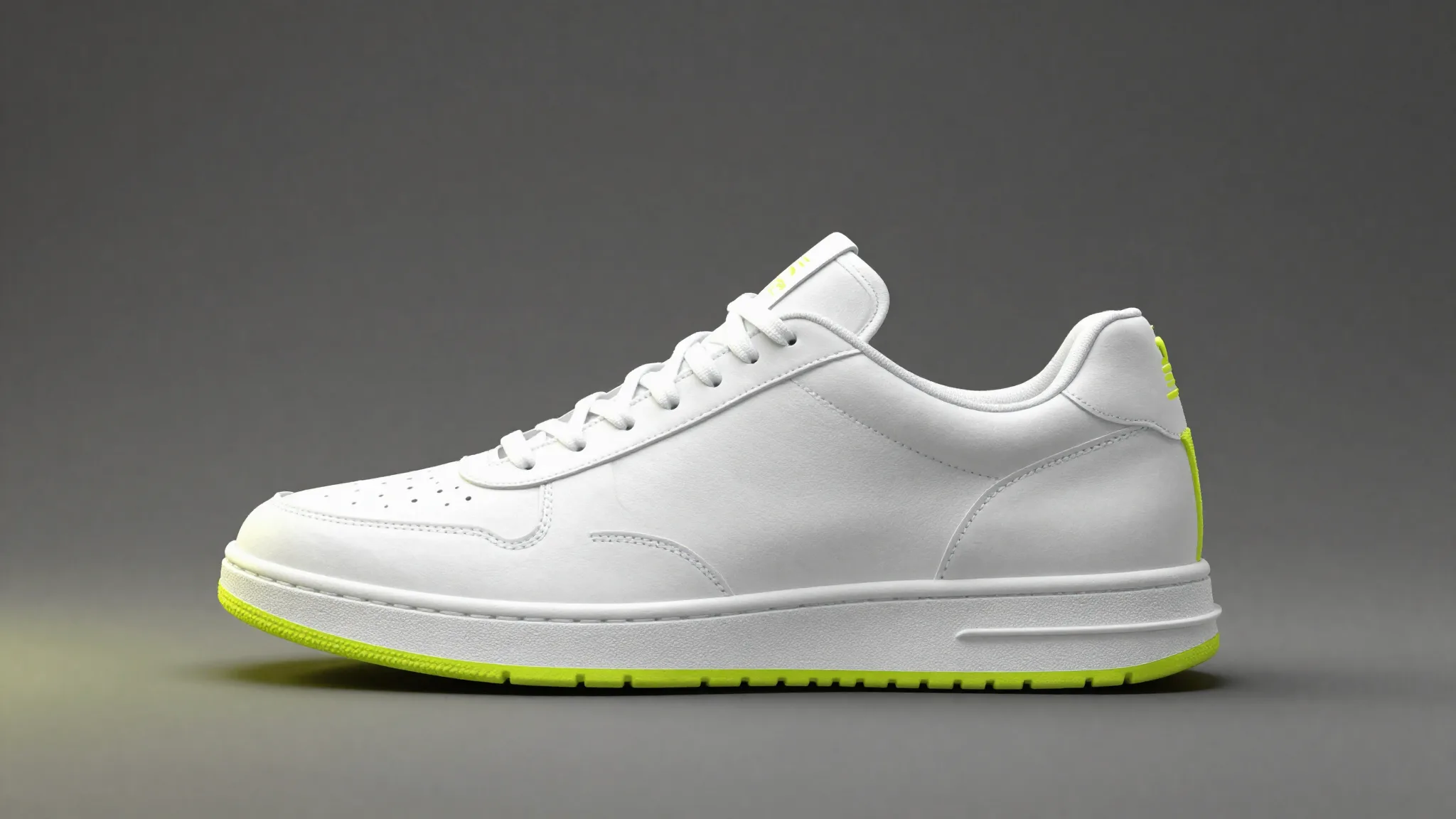
What Does a 3D Footwear Designer Actually Do?
A 3D footwear designer translates a concept — a sketch, a market reference, a creative director's brief — into a complete digital 3D model ready for production sign-off. The median annual wage for fashion designers in the US (the BLS category covering footwear) was $80,690 in May 2024, with senior earners exceeding $169,620 (U.S. Bureau of Labor Statistics, 2024).
This is not just "drawing in 3D." The role spans the full creative-technical pipeline from concept to production-ready file. Here's how a typical project flows:
Last study and import. Every shoe starts with the last — the 3D anatomical form around which the upper is built. A 3D footwear designer either imports a digital last provided by the factory or builds one from reference. Understanding the last geometry is foundational: where the instep peaks, how the heel curves, how the toe box opens. Everything downstream depends on reading it correctly.
Flattening and pattern construction. The curved 3D surface of the last is "opened" into flat pieces — a process called flattening (or flat pattern generation). These flat pieces become the base for drawing the component boundaries of the upper. Flattening is one of the most technically demanding steps in the entire workflow, and it's where generalist 3D knowledge fails you. Footwear-specific software handles this; general tools like Blender or Cinema 4D do not.
Component definition and material application. Cut lines for each upper piece are drawn in 3D. PBR materials — leather, mesh, synthetic fabric, suede — are applied with calibrated roughness, normal maps, and metalness values. Accessories and hardware (eyelets, zippers, lace loops, rivets) are placed and scaled on the model.
Rendering and presentation. Output ranges from a high-resolution static image to an interactive 360-degree view or a sales animation. Increasingly, this final output replaces the physical sample in sales presentations.
In many companies, especially mid-size Italian footwear manufacturers, the 3D designer also bridges the digital model and the physical pattern maker — passing precise measurements and geometry that speed up physical prototype creation when one is still needed.
[CHART: Bar chart — traditional vs. 3D-first design workflow stages and time per stage — Source: The Interline / DUO Design Studio, 2025]
Why Brands Are Hiring 3D Designers Right Now
The business case for 3D in footwear isn't an aesthetic preference. It's economics and sustainability, and it's pushing brands to hire actively for 3D-specific skills.
The global fashion footwear industry produces roughly 14 billion pairs of shoes annually and requires an average of 13 physical samples to finalize a single shoe design. That's approximately 26 million physical samples per year. Digital sampling workflows can cut sample production and shipping costs by over 60% (The Interline / DUO Design Studio, January 2025). This is not a niche optimization. It's a structural cost problem that 3D designers solve.
Adidas understood this early. Its Virtualisation programme, launched in 2004, had saved more than one million physical material samples by 2013 compared to a 2010 baseline, reducing waste, transportation costs, and carbon emissions — an established baseline proof point that the industry still cites (edie.net).
More recently, Chris Hillyer, Director of Innovation at Deckers Brands (parent of Hoka), explained the cost in human terms: designers "lose so much time waiting for samples to be shipped from overseas factories." Using 3D tools including Substance Painter, Deckers reduced material-texturing time by roughly 10x — from 20-30 minutes per material down to approximately 2-3 minutes for Hoka shoe assets (Adobe Substance 3D Magazine, April 2019).
Nike is signaling current demand most clearly. Its Senior Designer, Digital Design Excellence role (Job R-78750, active as of June 2025) requires 4+ years in 3D design and lists Blender, Maya, Rhino, Grasshopper, and Vizcom as required tools, with an explicit requirement to apply generative AI workflows to accelerate ideation (Nike Careers, 2025). That job description is the clearest signal yet of where the hiring bar sits.
In my experience training designers across Italian footwear districts, the studios that adopted 3D-first workflows two or three years ago are now the ones that clients call first. The ones that didn't are watching those clients reassign projects.
How to Become a Shoe Designer: Two Routes, One Destination
If you searched for how to become a shoe designer rather than a 3D footwear designer, the honest answer is that in 2026 these are no longer two separate careers — they are the same career at two different points in time.
The traditional route runs through drawing and construction: learn to sketch, learn how a shoe is assembled, apprentice with a pattern maker or a modelling department, and build a portfolio of physical work. It still produces excellent designers. What it no longer produces, on its own, is a hireable candidate at a brand that has moved its development cycle into 3D.
The 3D route inverts the order. You still need construction literacy — nobody flattens a last correctly without understanding what a last does — but you acquire it alongside the software rather than years before it, and your portfolio is digital from the start.
The five steps, in the order that actually works:
- Learn how a shoe is built before you learn any software. Components, the upper-to-sole relationship, how the last governs every dimension. Skipping this is the single most common reason designers stall: they can drive the software but can't judge whether what they've made is manufacturable.
- Learn to communicate an idea visually. Hand sketching still matters, but it is now one option among several. What matters is that a factory, a client, or a hiring manager understands your intent without a conversation.
- Pick one footwear-specialized CAD tool and go deep. Breadth across five generalist tools loses to depth in one industry-standard tool. Depth is what gets tested in an interview.
- Build a portfolio that shows process, not only renders. A finished hero render proves you can light a model. A flattened pattern next to the 3D upper it came from proves you can do the job.
- Learn the production handoff. Technical files, grading, cutter export. This is the step most self-taught designers skip, and it's the one that separates a designer a factory enjoys working with from one it tolerates.
The distinction worth internalizing: a shoe designer decides what the shoe should be, and a footwear pattern maker decides how it can exist. The designers with the most leverage today do both, and 3D is what makes doing both realistic for one person.
What Skills Do You Actually Need?
Becoming a 3D footwear designer requires a specific mix of technical skills and design judgment. You don't need all of them on day one, but you need a clear picture of what to build toward.
Technical Skills
Last reading and construction. Before you model anything, you need to understand what a last is and how it behaves: curvature variation, the peak instep height, how the heel pitch affects the upper. This is the foundation. Everything else in 3D footwear sits on it.
Flattening. The ability to open a curved 3D surface into an accurate flat pattern while preserving measurements is the most technically differentiated skill in this field. It's not taught in general 3D courses. It's specific to footwear software — which is precisely why professionals who know it are in short supply.
Software fluency. Speed and precision matter more than people outside the industry realize. A senior designer working in Icad Universe knows where every tool lives, knows the shortcuts, knows which workflow gets from last to flat pattern in twenty minutes instead of three hours. That efficiency is part of the value you're hired for.
PBR material management. Knowing the difference between roughness, metalness, and normal maps, and knowing how to calibrate them for realistic output on leather, mesh, or synthetic materials, determines whether your renders look professional or look like student work.
File export and production communication. DXF for 2D flat pieces, OBJ or FBX for 3D models, high-resolution JPEG or PNG for presentations. A 3D designer who can't hand off clean, properly formatted files is a bottleneck, not an asset.
Design and Relational Skills
Proportion instinct. The shoe has to look right on the last before it ever reaches production. Developing the eye for this takes time and deliberate practice. Looking at a lot of footwear, dissecting why certain designs work, and working through many iterations all build this capacity.
Brief interpretation. Briefs in this industry are often a market reference, a mood board, or a single adjective. Translating vague creative intent into a precise 3D model is a skill that compounds over time.
Cross-team communication. A 3D footwear designer works with pattern makers, buyers, and creative directors. Being able to explain why a line sits where it does, or why a material choice affects the construction, builds the trust that turns one project into a relationship.
Among the students I've trained, the ones who progress fastest share a consistent trait: they already understand footwear construction terminology before picking up the software. Designers who try to learn Icad Universe and flattening and upper construction simultaneously add months to their timeline unnecessarily.
The Software Stack: What You Need to Know
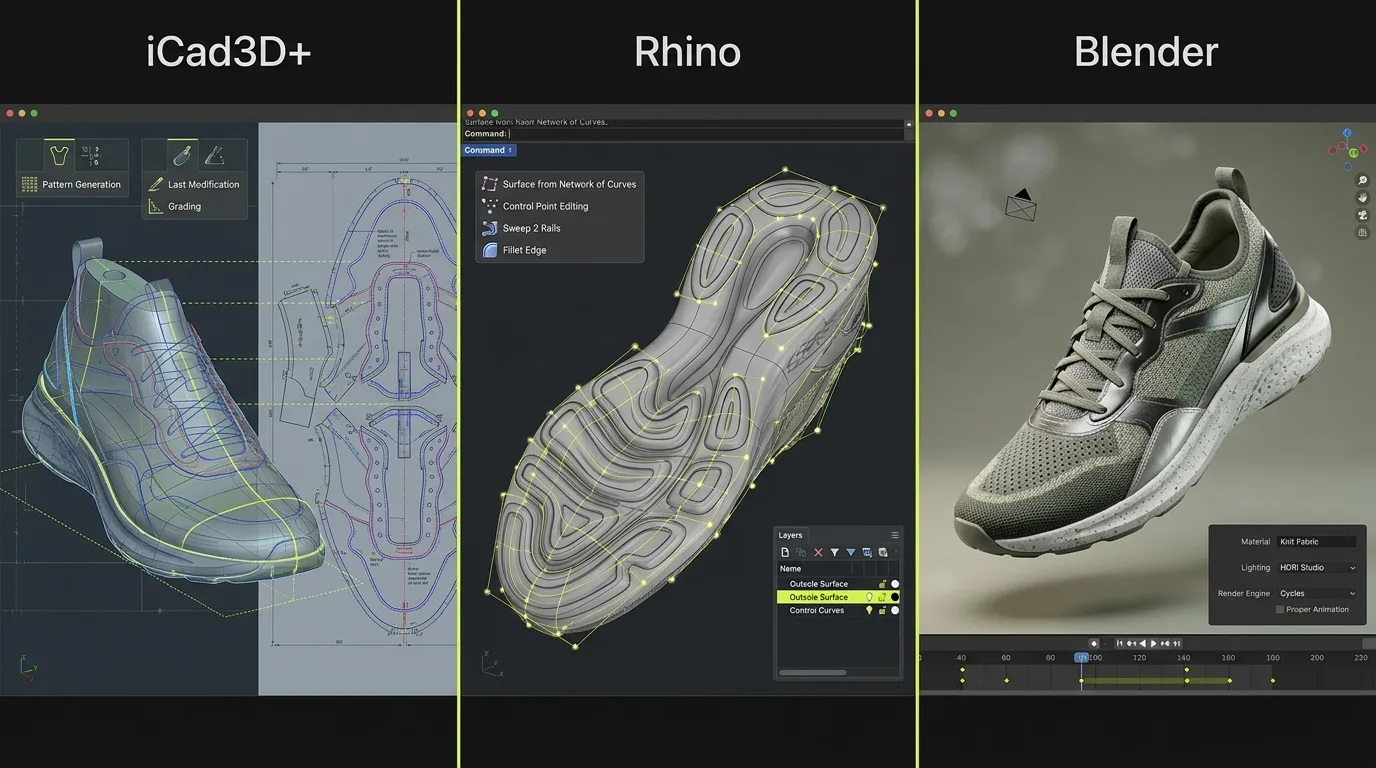
The software landscape in footwear design has distinct tiers. Knowing which tool to use for which job is itself a professional skill.
Icad Universe
Icad Universe is the CAD software developed specifically for 3D footwear design by INESCOP. It includes dedicated tools for last management, flattening, upper component construction, and final rendering. If you want to work with brands and manufacturers in structured footwear environments — particularly in the Italian districts of Brenta or the Marche — learning Icad Universe is not optional. It's the standard.
The software's core advantage is not raw 3D power but footwear-specific logic. Flattening algorithms, stitch-line tools, last import protocols — these are built in, not hacked together from general-purpose geometry functions.
Rhino (Rhinoceros 3D)
Rhino is the most widely used NURBS modeling software in industrial design and fashion. It's not footwear-specific, but many designers use it for complex sculptural outsoles, architectural heel geometries, and construction elements that fall outside standard workflows. Nike's active job postings list Rhino alongside Grasshopper (its parametric plugin) as required skills. The learning curve is real, but the modeling flexibility is unmatched for non-standard forms.
CLO3D
CLO3D began in fashion and textile simulation but is used increasingly in footwear for knit uppers and soft-material components. If you work on sneakers with engineered-knit constructions, or boots with soft leather panels, CLO3D's fabric simulation gives you material behavior data that static geometry tools can't.
Blender and Vizcom
Blender has become the rendering and visualization tool of choice for many studios, particularly for hero-shot renders and animations. It's free, its Cycles and EEVEE renderers produce high-quality output, and it integrates with PBR material libraries. Vizcom is the generative AI tool Nike explicitly names for ideation acceleration. Neither replaces footwear-specific CAD for construction work, but both matter for the output that clients and hiring managers actually see first.
Education and Self-Teaching Paths
There is no single mandatory route into 3D footwear design. The field attracts fashion designers specializing in footwear, traditional pattern makers moving to digital, industrial engineers drawn to the aesthetic side, and generalist 3D artists transitioning from architecture or product design.
That said, some foundations consistently matter, regardless of background:
Footwear construction literacy first. Before touching software, understand how a shoe is made: what components exist, how the upper attaches to the outsole and midsole, how a last governs every dimension of the design. This context makes every subsequent software lesson make sense. Without it, you're memorizing button presses without understanding why.
Footwear-specific 3D training. General 3D tutorials on YouTube will not teach you to flatten a last, manage a stitch-line in CAD, or set up a material correctly for a production presentation. The footwear software ecosystem has its own conventions and its own failure modes. Structured training from someone who works in the industry cuts months from the self-teaching timeline and, more importantly, prevents the wrong habits from forming. Wrong habits in technical workflows are expensive to undo.
Continuous update practice. Software releases cycle quickly. New rendering options, updated PBR material libraries, generative AI integration — the professionals who stay competitive treat software updates as part of their working week, not as occasional events.
If you want a structured path through all of this, from last fundamentals to a complete professional workflow, the 3D Footwear Design course at 3DFootwear Academy is built specifically for this progression — covering Icad Universe with methodical guidance from foundation through professional-level execution.
In the UK, entry-level footwear designer-makers earn around £24,000, with experienced professionals reaching approximately £40,000 (UK National Careers Service). US figures run higher, with the top 10% of fashion/footwear designers earning more than $169,620 (U.S. Bureau of Labor Statistics, 2024). The 3D specialization is consistently toward the higher end of these ranges, given supply constraints.
Where 3D Footwear Designers Work
The demand for 3D footwear designers spans several distinct contexts. Each has different expectations and trade-offs.
Luxury and fashion brands. Major houses are digitizing their creative process. They want 3D designers who can integrate with design and production teams, produce assets for digital sales presentations, and reduce dependency on physical sampling. These roles tend to offer structure, brand exposure, and access to premium materials — and are increasingly competitive.
B2B footwear manufacturers. The factories and studios that produce for brands are adopting 3D to accelerate approval cycles and cut sample budgets. They often want hybrid technical-creative profiles — someone who can model and also communicate precisely with a physical pattern maker.
Design studios and consultancies. Specialized footwear design studios work across multiple clients simultaneously. The variety is high, the pace is fast, and exposure to different brand aesthetics builds adaptability quickly.
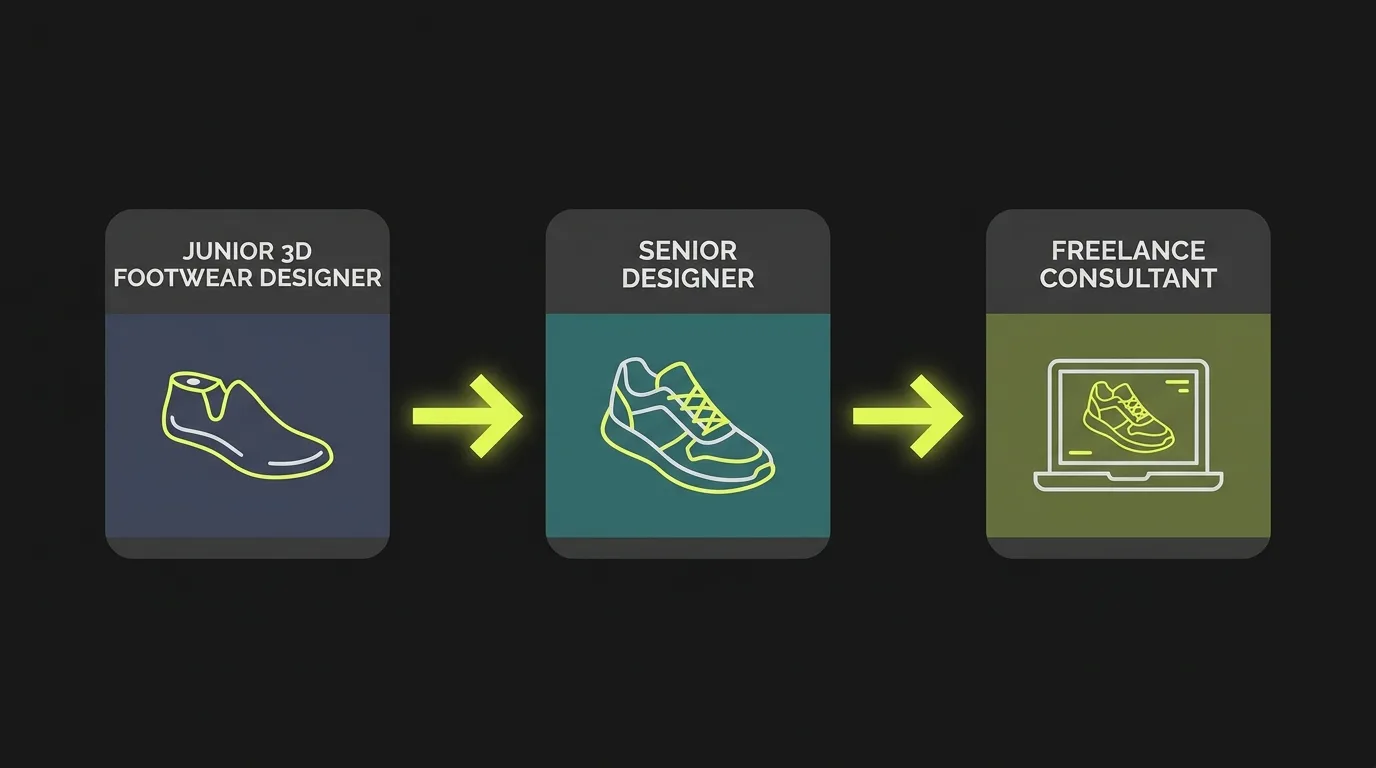
Freelance. A solid portfolio and an industry network can support an independent practice. Freelance 3D footwear work offers flexibility and control, but requires commercial skills alongside design skills.
How to Build a 3D Footwear Portfolio That Works
The portfolio is the single most important asset you control. In 3D footwear, a strong portfolio is not a gallery of finished renders — it's evidence of a capable process.
Show the workflow, not just the outcome. Include screenshots of the model at key intermediate stages: the imported last, the flat pattern after flattening, the model with materials applied before final lighting, and the final render. A hiring manager or client wants to understand whether you can work, not just whether you own a render farm.
Cover multiple product categories. Sneakers, dress shoes, ankle boots, sandals: each has distinct construction logic. A portfolio spanning three or four categories signals adaptability and genuine knowledge of the field. A portfolio of fifteen sneaker renders signals a narrow starting point.
Invest in the render quality. A technically accurate model with mediocre lighting and a default background communicates less than it should. Lighting, material calibration, and background treatment determine the first impression. In most portfolios I've reviewed, the gap between a good model and a good presentation is where candidates lose ground.
Add written context for each project. Two to three sentences per project: what the brief was, what the key technical decisions were, what the result showed. A portfolio that explains itself doesn't require a hiring manager to fill in the blanks. One that doesn't forces them to guess — and guessing is rarely in the candidate's favor.
Update ruthlessly. Remove older work as newer work surpasses it. The portfolio is not an archive. It's a current-capability statement.
The single most common mistake I see in student portfolios: they show the render but cut the process. Brands hiring for 3D roles don't just want beautiful output — they want to know you can operate inside a production pipeline under deadline pressure. The process screenshots prove that. The render alone does not.
FAQ
Do I need a design degree to become a footwear designer?
No degree is required, though some large brands treat it as a filter at the application stage. The field is far more portfolio-driven than credential-driven. Professionals with strong technical skills, footwear-specific software proficiency, and a well-documented 3D portfolio regularly outcompete degree holders who lack hands-on production experience.
How long does it take to become job-ready as a 3D footwear designer?
Someone with existing footwear knowledge (pattern making, traditional design) adding 3D skills can be job-ready in 3 to 6 months with focused training. A true beginner with no footwear background should expect 12 to 18 months before having a portfolio strong enough to compete for junior roles. Background matters more than effort alone.
What software should I learn first?
Start with Icad Universe if your goal is to work in the footwear industry directly — it's the field standard for structured brand and manufacturer environments and includes the flattening tools that matter most. Add Rhino for sculptural and parametric work, and Blender for rendering and visualization. Vizcom is increasingly relevant for early ideation if generative AI workflows are part of your target role.
Can I teach myself 3D footwear design without a course?
Partly. General 3D modeling tutorials are widely available, and curiosity carries you far. The specific bottleneck is footwear-specific knowledge: flattening, last management, construction logic. These require either expert guidance or years of trial-and-error. Structured training eliminates wrong habits early — and wrong habits in technical workflows typically cost several months to correct.
Is a shoe designer the same as a footwear designer?
In everyday use, yes — the two titles are interchangeable, and job listings use both. "Footwear designer" is the term the industry and career services prefer, while "shoe designer" is what most people search for. Where a real distinction exists, it's between the design role (deciding form, materials, and function) and the pattern making or modelling role (engineering that design into producible pieces). Both titles are used for the design role; in 3D workflows the boundary between the two has thinned considerably.
Is 3D footwear design a stable career path?
The BLS projects 2% employment growth for fashion designers through 2034, about 2,300 openings per year (BLS, 2024). But within that, the 3D specialization is a narrower field with a shorter supply of qualified professionals. Brands are hiring actively for it — Nike's live 2025 job postings confirm the demand is current. The 3D path offers more stability than the generic "shoe designer" category suggests.
Ready to Start the 3D Path?
Becoming a 3D footwear designer in 2026 is a concrete, achievable goal. The market demand is documented, the toolchain is accessible, and the gap between generic design candidates and 3D-capable professionals is large enough to matter for salaries and job placement.
The path looks like this: build footwear construction knowledge first, then develop software fluency in Icad Universe and Rhino, then practice rendering in Blender or Vizcom, then document your process in a portfolio that shows how you work. Iterate from there.
If you want a guided, structured version of that path, the 3D Footwear Design course at 3DFootwear Academy walks through the full workflow with Icad Universe, from last fundamentals to professional-level output — built and taught by Susanna Zampieri, official Icad Universe trainer with a decade of active industry work.