Shoe Materials: A Designer's Map by Shoe Component
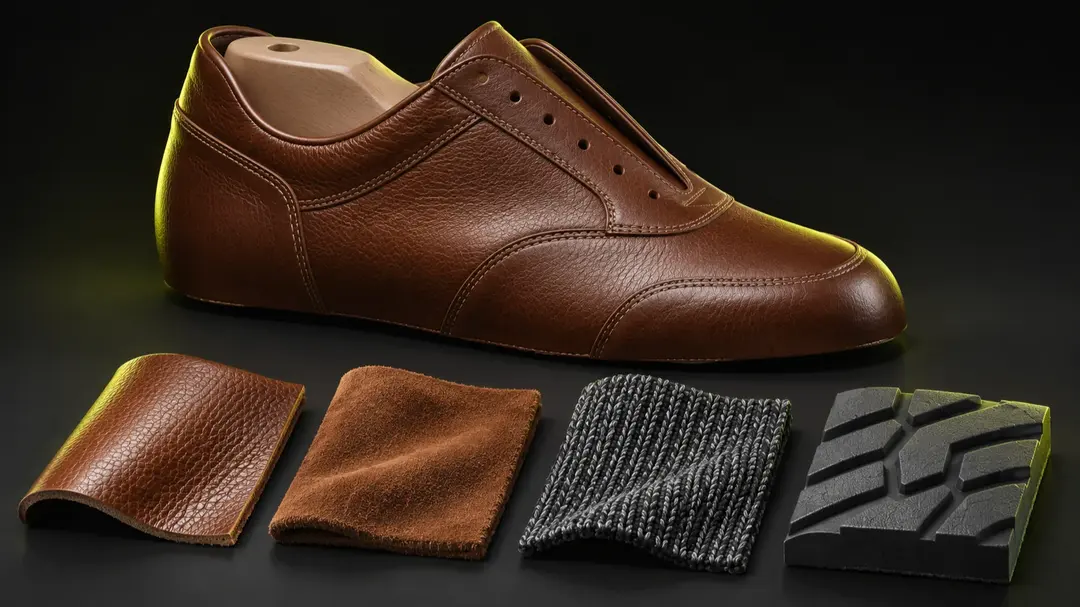
Most lists of shoe materials are organised by material: leather, canvas, rubber, foam. That is how a supplier catalogue works, but it is not how a shoe is designed. A designer never chooses "leather" in the abstract. They choose a material for the upper, another for the lining, another for the toe stiffener, and every one of those choices has to be compatible with the others.
This guide goes component by component, from the top of the shoe to the ground. For each part you get the realistic options, what each one does to the pattern, and how it ends up in the 3D model and in the tech pack.
Key Takeaways
- Shoe materials are best chosen per component (upper, lining, reinforcements, insole board, midsole, outsole), because each part has a different job: look, comfort, shape retention, or grip.
- Leather types differ by how much of the natural grain is kept: full-grain is the most natural, corrected-grain is sanded and embossed, nubuck and suede are abraded surfaces.
- Material choice changes the pattern: stretch, thickness and skiving requirements decide the allowances and the cut direction.
- In 3D, a material is a set of PBR parameters (colour, roughness, normal, thickness), not just a texture picture.
- In the tech pack, every material is a line in the bill of materials with a code, thickness, supplier and the part it applies to.
What Are Shoe Materials?
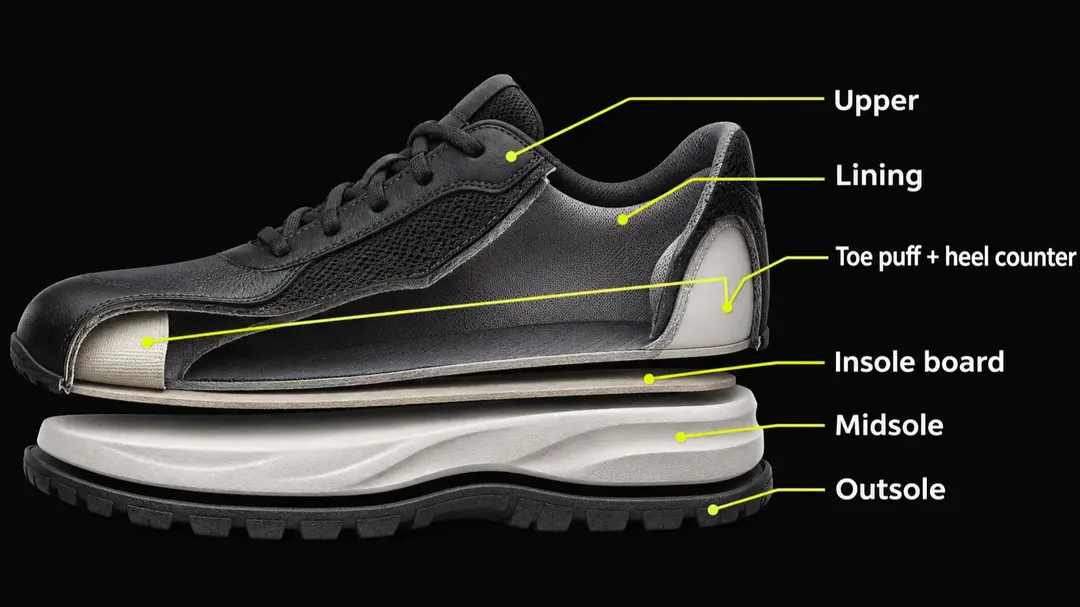
Shoe materials are the leathers, textiles, polymers, foams, boards and rubbers from which each component of a shoe is made, and they are chosen separately for the upper, lining, reinforcements, insole, midsole and outsole.
A typical shoe uses somewhere between ten and thirty distinct materials once you count adhesives, threads, eyelets and trims. The ones that decide how the shoe looks and behaves are a short list, and they map neatly onto the anatomy described in our guide to the parts of a shoe.
| Component | Main job | Typical materials |
|---|---|---|
| Upper | Appearance, enclosure, flex | Leather, textile, knit, mesh, synthetics |
| Lining | Comfort, moisture, friction | Leather, textile, synthetic |
| Reinforcements | Shape retention | Thermoplastic, leatherboard, fibreboard |
| Insole board | Base for lasting, stability | Cellulose board, non-woven, EVA |
| Midsole | Cushioning, stability | EVA, PU, TPU, cork |
| Outsole | Grip, wear | Rubber, TPR, leather, PU |
Upper Materials
Upper materials are the visible skin of the shoe, and they are the biggest design decision: they define the look, the price tier and how the pattern has to be built.
Types of Leather for Shoes
Leather remains the reference upper material for dress, boots and most premium footwear. The main types differ by how much of the original surface survives the tannery.
| Leather type | Surface | Character | Typical use |
|---|---|---|---|
| Full-grain | Natural grain kept, no sanding | Strongest, develops patina, shows marks | Quality dress shoes, boots |
| Top-grain / corrected-grain | Lightly sanded, often embossed or coated | Uniform, easier to cut, less breathable | Mid-range shoes, sneakers |
| Nubuck | Grain side abraded to a fine nap | Velvet-like, resists wear better than suede | Boots, casual shoes |
| Suede | Flesh side (or split) brushed to a nap | Soft, stains easily, softer structure | Loafers, sneakers, fashion |
| Patent | Grain coated with a glossy finish | High shine, little stretch, cracks on flex lines | Evening shoes, formal |
| Calf, kid, goat, lamb | Defined by the animal, not the finish | Fine grain (calf, kid), soft hand (lamb) | Fine dress and women's shoes |
Two terms cause most of the confusion. "Genuine leather" is a label that only tells you the product is real leather, not that it is a high grade. "Full-grain" is a statement about the surface treatment, not about the animal. The Wikipedia entries on leather and nubuck cover the tanning side in more depth.
Chrome Tanning vs Vegetable Tanning
Tanning is the step that turns a raw hide into stable leather, and the method changes how the material behaves in the workshop. The two families you meet most often are chrome tanning and vegetable tanning.
| Chrome-tanned | Vegetable-tanned | |
|---|---|---|
| Tanning agent | Chromium salts | Plant tannins (bark, leaves, wood extracts) |
| Character | Soft, supple, even colour, stable when wet | Firmer, fuller, takes burnishing and develops patina |
| Behaviour on the last | Stretches and moulds evenly; widely used for uppers and linings | Holds a moulded shape well; common for outsoles, insoles and stiff leather goods |
| Pattern impact | More forgiving, easier to skive and fold | Less forgiving at folds and tight curves; edges are more finished by burnishing |
In practice, most uppers are chrome-tanned because the leather is soft, consistent and tolerates humidity and heat during lasting. Vegetable-tanned leather is the traditional choice for leather soles and insoles and for pieces that are meant to be shaped and burnished. It is stiffer and more sensitive to water, so it asks for more careful skiving and less aggressive lasting. Combination and chrome-free tannages also exist; ask the tannery which process was used and record it in the tech pack, because it affects both the finish and the lasting behaviour.
In the studio, the practical difference shows up at the cutting table. A full-grain skin has natural scars and uneven stretch from neck to flank, so the pattern has to be nested around the usable zones. A corrected-grain hide behaves more uniformly, which is why it is easier to cut consistently across a production run.
Textiles, Knit and Mesh
Textile uppers dominate sport and lifestyle footwear because they are light, breathable and easy to shape in colour and pattern.
- Woven textiles (canvas, cotton, nylon, technical weaves): stable in one direction, stretchy on the bias.
- Engineered mesh: zones of open and dense structure bonded in layers, used to place ventilation exactly where it is needed.
- Knit: formed to shape rather than cut from a flat roll, with stretch and structure varying by zone. A knit upper is closer to a sock than to a pattern.
Because knit and some mesh are shaped or zoned, the pattern is less about cutting pieces and more about defining regions of the upper where the structure changes.
Synthetics and PU Microfibre
Synthetic uppers are coated or laminated materials that imitate leather. Polyurethane-coated fabrics and microfibre (a fine non-woven base with a PU surface) are the most common. They offer consistent thickness, lower cost and no animal-hide waste, but they breathe less and age differently from leather: they tend to crack or peel at the surface instead of developing patina.
A good rule: synthetic materials are very predictable, and that is their real advantage in production. Every metre cuts and stretches the same way.
Lining Materials
Lining materials sit against the foot and decide comfort and moisture handling. Leather linings (often pigskin, goat or calf) absorb and release moisture well. Textile linings are lighter and cheaper, and synthetic linings add durability at the cost of breathability.
For the pattern, the lining is usually cut slightly smaller than the upper, with different stretch behaviour, so the two layers lie together without wrinkling. A thin unstable lining on a stiff upper is a common source of puckering at the collar.
Reinforcements: Toe Puff and Heel Counter
Reinforcements are the hidden stiffeners between upper and lining. They hold the shape the last gave the shoe, long after lasting is finished. The two main ones are the toe puff (at the front) and the heel counter (around the back). Where each sits in the shoe is shown in the parts of a shoe guide.
| Material | How it works | Pros | Cons |
|---|---|---|---|
| Thermoplastic | Softens with heat, sets as it cools | Consistent, lightweight, easy to mould | Less natural, can feel stiff |
| Leatherboard (fibre leather) | Moulded with moisture and heat | Breathable, traditional, repairable | Heavier, can soften when wet |
| Non-woven stiffener with adhesive | Heat-activated layer | Thin, ideal for sneakers and fashion | Gives less rigid support |
Choose by use: a dress shoe or boot that has to hold its shape for years usually wants a firmer counter, while a flexible sneaker can use a lighter one. The material also needs a specific skived edge so it does not show as a ridge through the upper.
Insole Board and Insole
The insole board is the layer that the upper is lasted onto, so it must be stable enough to hold the lasting margin and flexible enough not to fight the foot. Cellulose board, non-woven fibreboards and EVA-based boards are the common options, depending on the construction method. A board suited to stitch-down construction is not the same as one suited to cementing, and the choice should follow the build you set in the tech pack. Our guide to shoe construction methods shows which board goes with which build.
The visible insole (sockliner) is a separate component, usually a foam or a leather-covered foam, chosen for comfort rather than structure.
Midsole and Outsole Materials
Midsole and outsole materials carry the load and meet the ground. Their detail belongs in the types of shoe soles and midsole guides, but here is the short map.
| Material | Used for | Character |
|---|---|---|
| Leather | Dress outsoles | Elegant, breathable, slips on wet surfaces |
| Natural and synthetic rubber | Outsoles | Grip and abrasion resistance, heavier |
| TPR / TR (thermoplastic rubber) | Injection-moulded outsoles | Low cost, easy to mould, less durable than rubber |
| EVA | Midsoles, light outsoles | Very light, cushioned, compresses over time |
| PU (polyurethane) | Midsoles, outsoles | Durable, good rebound, can hydrolyse with age |
| TPU | Overlays, plates, outsoles | Strong, abrasion resistant, used for structure |
Midsoles decide cushioning and weight, while outsoles decide traction and wear. When both are the same material, the sole is often a single unit; when they differ, they are bonded or co-moulded.
How Material Choice Changes the Pattern
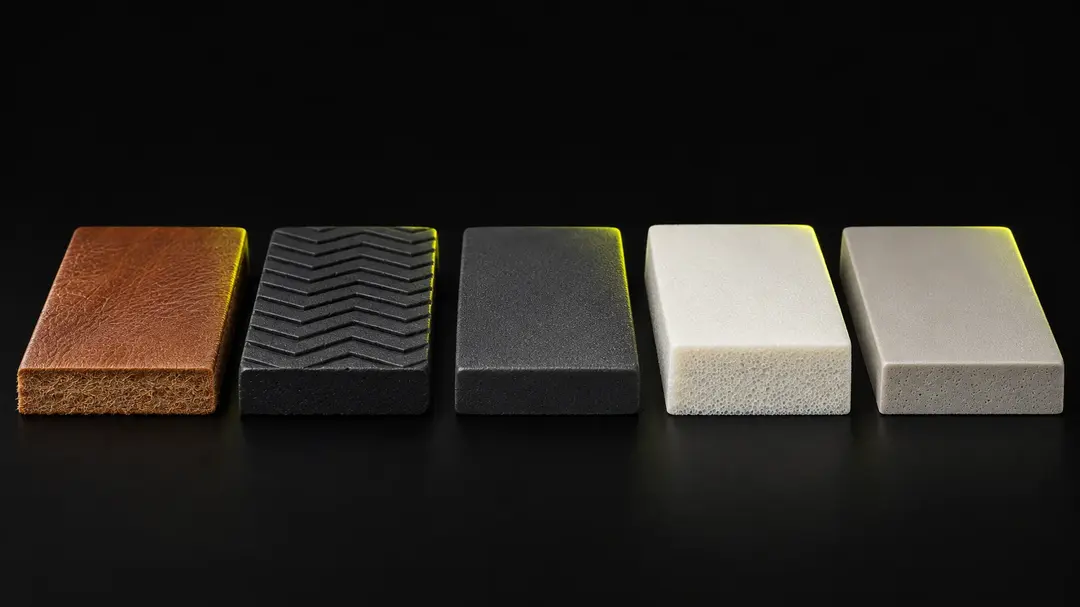
Every material has behaviours that the pattern-maker must design around: how much it stretches, in which direction, how thick it is, and how it folds. The same shoe shape drawn in two materials needs two different patterns. This is the part most materials lists skip, and it is where a designer's view differs from a buyer's.
- Stretch direction. Leather stretches more across the hide than along the backbone, so, as a general rule, critical stretch zones (vamp, collar) are oriented accordingly; follow the tannery's guidance for each skin. Textiles stretch on the bias.
- Thickness and skiving. Thick leather needs to be skived (thinned) at seams and folded edges. Where skiving is not possible, the allowance changes.
- Seam allowances. A rigid or thick material needs a bigger fold or a different seam type than a thin soft one.
- Lasting behaviour. A material that stretches a lot over the last needs a smaller pattern than the last surface it covers, while a stable material needs to be cut closer to the final size.
When I build a pattern, I decide the material before the cut lines, because moving from calf to a synthetic microfibre can mean redistributing seams and changing allowances. The principles are covered in shoe pattern making.
How Materials Are Represented in 3D
In a 3D footwear model, a material is a set of parameters that the renderer reads, not a flat image of leather. The common approach is PBR (physically based rendering), which describes colour, roughness, how metallic the surface is, and fine surface relief through a normal map.
That means the difference between patent and suede is mostly a difference in roughness and normal detail, not in colour. A patent surface has a very low roughness and sharp reflections; suede has high roughness and a visible nap. If you want to see the workflow step by step, read PBR materials and textures for footwear.
Thickness matters in 3D too, because it drives how the model is flattened and how the edge looks at seams. Models that ignore thickness tend to produce patterns that do not match the physical piece.
How Materials Go Into the Tech Pack
In the tech pack, materials live in the bill of materials (BOM): a table that lists each material, the component it applies to, its code, thickness, colour and supplier. The factory orders and cuts from this table, so vague entries ("brown leather") create sample errors.
A useful BOM line for the upper reads like this:
| Part | Material | Spec | Colour | Supplier code |
|---|---|---|---|---|
| Vamp | Full-grain calf | 1.2 to 1.4 mm | Cognac | Per supplier |
| Lining | Goat leather | 0.8 mm | Natural | Per supplier |
| Toe puff | Thermoplastic | 0.8 mm | n/a | Per supplier |
Note that the values above are an illustration of format, not a recommended spec; thicknesses depend on the shoe and the supplier. The full structure of the document is explained in the guide to the shoe tech pack.
Sustainable and Bio-Based Shoe Materials
Sustainable shoe materials are an area where the claims move faster than the evidence, so it helps to separate what each option actually is. Recycled content (for example polyester or nylon textiles made from recycled fibre) reduces the use of virgin plastic but behaves like the original textile in the pattern. Bio-based foams and plant-derived leather alternatives replace part of the fossil raw material, but they are often blends that still contain polyurethane or other polymers. Chrome-free and vegetable tannages address the tanning chemistry rather than the hide itself.
From the designer's side, the questions are practical: what is the real composition, how does it stretch and skive compared with the material it replaces, and does it survive lasting and gluing? Ask suppliers for composition and test data instead of relying on the marketing name, and treat a new material like any other one: sample it, build a test pattern and check it on the last before committing a collection to it.
How to Choose Shoe Materials: A Practical Order
Choosing materials works best in a fixed sequence, because each decision narrows the next one.
- Define the use and price tier. A formal shoe, a trail runner and a fashion sneaker have different material families.
- Pick the upper. It sets the look and the pattern logic.
- Match lining and reinforcements to the upper. They must work with its thickness and stretch.
- Choose the construction and the insole board. They depend on each other.
- Select midsole and outsole. They follow weight, grip and cost targets.
- Record everything in the BOM with thickness, code and supplier.
FAQ
What are the main types of leather for shoes?
The main types are full-grain, top-grain or corrected-grain, nubuck, suede and patent leather. They differ in how much of the natural surface is kept and how it is finished, which affects durability, appearance and how the pattern is cut.
What is the best material for a shoe upper?
There is no single best material. Full-grain leather suits durable dress shoes and boots, textiles and knit suit lightweight sport footwear, and synthetics suit consistent, lower-cost production. The best choice depends on use, price and the look you want.
What is the difference between nubuck and suede?
Nubuck is made by abrading the grain (outer) side of the hide to a fine nap, while suede is typically made from the flesh side or a split. Nubuck is generally more wear-resistant, while suede is softer and marks more easily.
What is a toe puff and a heel counter made of?
Both are made of thermoplastic sheet, leatherboard or heat-activated non-woven stiffeners. Thermoplastics are consistent and lightweight; leatherboard is more traditional and breathable.
How do shoe materials appear in a tech pack?
They appear in the bill of materials as one line per material, with the component it applies to, thickness, colour and supplier code, so the factory can order and cut exactly what the designer intended.
Does material choice change the shoe pattern?
Yes. Stretch, thickness and edge behaviour determine seam allowances, skiving and cut direction, so changing the upper material often means revising the pattern.
From Material Choice to a Finished Shoe
Materials only become meaningful when they are tied to a pattern, a 3D model and a specification. That is the connection we work through in the 3D footwear design course, where each material is assigned, modelled and documented as part of a complete shoe.